Annual Fire Safety Statement (AFSS) Service in NSW
What’s Involved in the Annual Fire Safety Statement Process?
Review of your building’s fire safety schedule to identify all essential fire safety measures
On-site inspection and assessment of each measure against its prescribed performance standard
Identification of any defects or non-compliant measures requiring rectification
Coordination of any required maintenance or repair works before certification
Preparation of accurate, council-ready AFSS documentation
Submission support – we can liaise with council on your behalf
Is an AFSS Mandatory in NSW?
Yes. Class 2 to Class 9 buildings – including commercial offices, retail premises, warehouses, strata residential buildings, and mixed-use developments – must submit an AFSS to their local council every 12 months. The statement must be accompanied by supporting inspection and maintenance records. Without proper servicing records, certification cannot be issued.
Why the AFSS is Critical for Your Business
The AFSS serves as a formal guarantee to the local council and the public that your building is a safe environment. If you own or manage a Class 2 to Class 9 building, this annual requirement is a non-negotiable part of your operational calendar.
Legal Compliance: In NSW, submitting an AFSS is a statutory obligation. Failing to lodge this document by the specific “anniversary date” (usually the date the initial fire safety schedule was issued) can lead to immediate regulatory action.
Public Accountability: A current copy of your statement must be prominently displayed within the building. This provides transparency to occupants, visitors, and emergency services, proving that the fire systems they rely on have been recently verified.
Insurance & Liability Protection: In the event of any fire damage to the building, if you are unable to produce requested documentation as a proof that you have carried out all due diligence in maintaining fire equipment, your insurance claims may be at risk.
Safety Assurance: Most importantly, the AFSS process identifies defects before an emergency occurs. It ensures that fire extinguishers, emergency lighting, smoke alarms, fire doors, and hydrants etc perform to the exact standard specified in your building’s original Fire Safety Schedule.
The Role of the Accredited Practitioner (APFS)
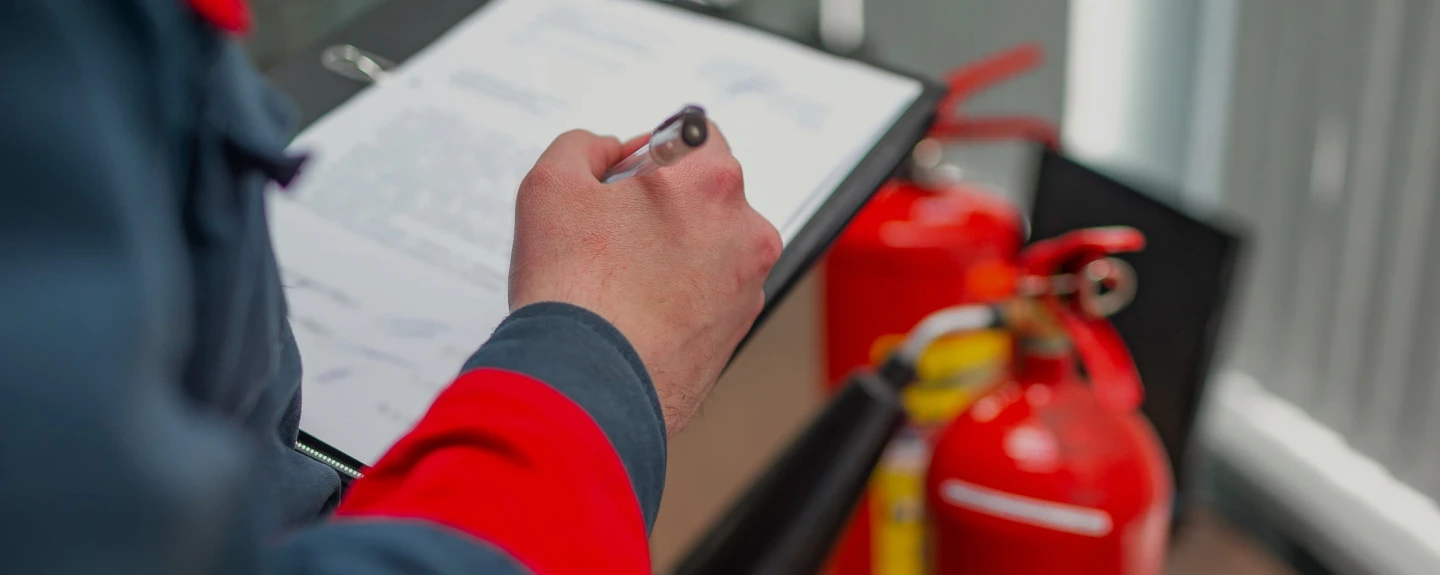
A major shift in NSW legislation (fully enforced as of 2026) is the requirement for a qualified Accredited Practitioner of Fire Safety (APFS). Building owners can no longer simply have a general handyman assess or maintain the fire equipment.
To complete a valid AFSS, an APFS must:
Inspect & Assess: Physically test every essential fire safety measure listed on your schedule or at least witness the evidence of tests carried out.
Verify Performance: Confirm that each measure listed in the fire safety schedule — meets the minimum performance standard required by the National Construction Code (NCC).
Endorse the Statement: Provide the professional sign-off that the local council requires to accept your submission.
Key Requirements for a Successful Submission
To ensure your Sydney property remains compliant and avoids unnecessary stress, keep these four pillars in mind:
Annual Frequency: The statement must be submitted to your Local Council and Fire and Rescue NSW every 12 months. Marking the anniversary date in your business calendar is the best way to prevent last-minute rushes.
Class 2–9 Buildings: This requirement covers almost all commercial and multi-residential settings. If your building is a warehouse, a childcare center, a cafe, or an apartment block, you are likely within this scope.
Fire Safety Schedule: Your AFSS must address every item listed on your building’s specific Fire Safety Schedule. If you have added new equipment or renovated your space, your schedule may need updating to reflect these changes.
Penalty Avoidance: Councils are increasingly proactive in issuing fines for late submissions. Often, these fines accumulate for every week the statement is overdue, making early preparation the most cost-effective strategy.
Simplifying Your Compliance Journey
We understand that small business owners have enough on their plates without worrying about complex fire regulations. Our team provides a turnkey solution for Sydney properties, handling everything from the initial APFS assessment to the final lodgment of your paperwork.
By aligning your maintenance with AS 1851-2012 and utilizing our accredited experts, we ensure your building remains a safe haven for your staff and customers. Don’t wait for a council reminder or an insurance audit to find out you’re behind on your obligations.
Is your Annual Fire Safety Statement due? Contact our Sydney fire safety specialists today to schedule your mandatory inspection and keep your business protected.