Dry Powder Fire Extinguishers (ABE) in Sydney & NSW
The ABE dry chemical powder fire extinguisher is the most commonly used portable extinguisher in Australian commercial and industrial environments. ABE stands for the fire classes it covers: Class A (solid combustibles like paper, wood, and fabric), Class B (flammable liquids like petrol and oil), and Class E (electrically energised equipment). This multi-class capability makes the DCP fire extinguisher the default choice for mixed-risk environments where a single unit needs to address multiple fire hazards.
SPS Fire & Safety supplies and installs the full range of dry powder ABE extinguishers for businesses across Sydney and NSW, including offices, warehouses, workshops, retail tenancies, strata buildings, and industrial facilities. Every unit we supply is approved to AS/NZS 1841.5 and installed in compliance with AS 2444 (selection and location of portable fire extinguishers).
What Does ABE Stand For in a Fire Extinguisher?
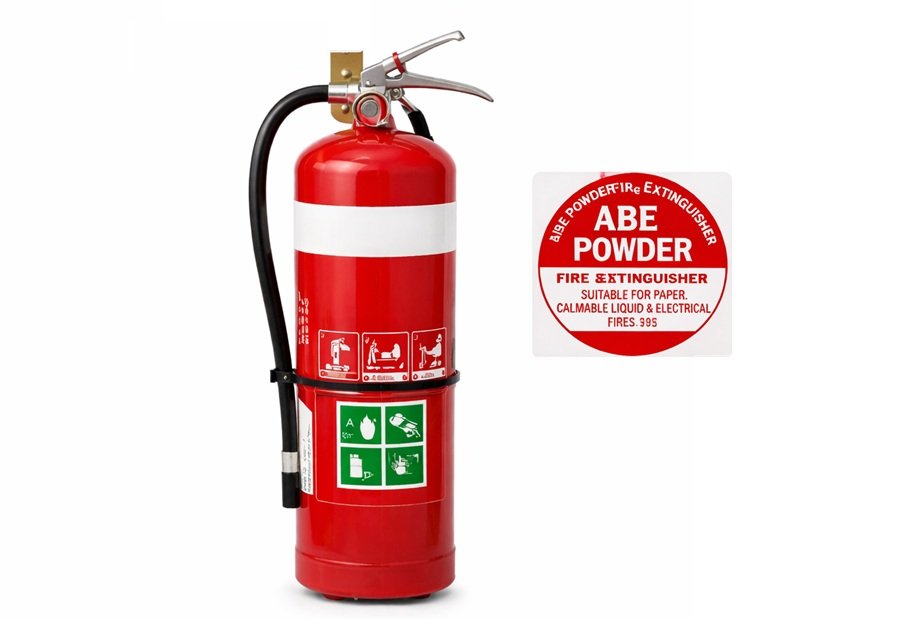
ABE refers to the three fire classes the extinguisher can tackle: A (ordinary combustibles – wood, paper, fabric, plastics), B (flammable and combustible liquids – petrol, solvents, oil-based paint), and E (electrically energised equipment). Some dry powder extinguishers are rated only for BE fires – always check the label to confirm the full rating before purchase.
WHAT IS ABE FIRE EXTINGUISHER?
ABE dry powder fire extinguishers use monoammonium phosphate as their extinguishing agent. When discharged, the fine powder blankets the burning material and disrupts the chemical chain reaction sustaining the fire. The letters A, B, and E denote the fire classes the extinguisher is rated to extinguisher under Australian standards.
Identified by a white band on the cylinder, these units are among the most widely used extinguishers in Australia due to their broad applicability and cost-effectiveness.
Dry Powder vs CO2 Fire Extinguisher
The main trade-off is versatility versus residue. ABE dry powder extinguishers cover three classes of fire and are significantly cheaper, but leave a fine powder coating that can damage sensitive electronics and requires thorough clean-up. CO2 extinguishers cover Classes B and E only but discharge without any residue. For most commercial and industrial environments, the ABE dry chemical powder extinguisher is the right starting point – often supplemented with a CO2 unit in areas with significant electrical equipment.
ABE – THREE CLASSES COVERED
A
ORDINARY COMBUSTIBLES
— Wood & paper
— Cardboard & textiles
— Some plastics
B
FLAMMABLE LIQUIDS
— Petrol & diesel
— Solvents & paints
— Flammable oils
E
ELECTRICAL EQUIPMENT
— Switchboards
— Distribution boards
— Electrical machinery
IMPORTANT: NOT FOR CLASS F (COOKING OIL) FIRES
Dry powder extinguishers must not be used on Class F fires (cooking oils and fats). For commercial kitchens, a wet chemical (F) extinguisher is the required solution under Australian Standards.
CO2 Extinguisher Sizes Available
SIZE
DESCRIPTION
1 KG ABE FIRE EXTINGUISHER
Ideal for vehicles, caravans, boats, and small spaces
2 KG ABE FIRE EXTINGUISHER
Popular for vehicles, small workshops, and compact commercial spaces
2.5 KG ABE FIRE EXTINGUISHER
Suited to workshops and medium commercial environments
4.5 KG ABE FIRE EXTINGUISHER
The most common commercial size for offices and retail
9 KG ABE FIRE EXTINGUISHER
Heavy-duty coverage for warehouses, plant rooms, and high-risk areas
All supplied with wall bracket, maintenance tag, and AS 2444-compliant signage
Supply, Install & Service in Sydney & NSW
SPS supplies and installs dry powder ABE fire extinguishers across greater Sydney, Western Sydney, Parramatta, and all of NSW. We offer competitive pricing, fast installation, and full compliance documentation. All installations include the correct identification signage and are recorded in your fire safety maintenance register. Get in touch for a DCP fire extinguisher supply and install quote in NSW.
Our Process
How It Works
When discharged onto a fire, the fine monoammonium phosphate powder forms a blanket over the burning material. This:
Interrupts the chemical chain reaction of the fire
Separates the fuel from oxygen
Smothers the flame and prevents re-ignition
The powder particles are extremely fine, allowing them to rapidly disperse and effectively suppress flames across a broad surface area.
Design and Distribution Considerations
The selection, size, and spacing of extinguishers are governed by relevant Australian Standards and regulatory requirements. Factors influencing compliance include:
Building classification
Fire hazard level
Travel distance requirements
Minimum extinguisher rating
Quantity and type of combustible materials
Presence of flammable liquid storage
Electrical risk profile
Correct distribution is critical to ensure compliance and practical firefighting capability.
Advantages of ABE Extinguishers
Multi-class protection (A, B, and E)
Cost-effective solution for mixed-risk environments
Reduces need for multiple extinguisher types
Suitable for commercial, industrial, and residential applications
While ABE extinguishers offer broad coverage, they may not always be appropriate for sensitive equipment areas due to powder residue. Risk assessment and proper design review are essential before determining suitability.