Wet Chemical Fire Extinguishers in Sydney & NSW – Kitchens & Hospitality
If you operate a commercial kitchen, café, restaurant, food hall, or any professional cooking environment, a wet chemical fire extinguisher is not optional – it is a mandatory requirement under both Australian Standards and NSW fire safety regulations. The wet chemical (AF type) extinguisher is the only extinguisher type specifically designed and rated for Class F fires, which involve burning cooking oils and fats. Using any other extinguisher type on a cooking oil fire – including water or dry powder – can cause the fire to violently spread or explode.
SPS Fire & Safety supplies and installs wet chemical fire extinguishers for hospitality businesses, commercial kitchens, school canteens, aged care facilities, and food manufacturing environments across Sydney and NSW. All units are approved to AS/NZS 1841.3 and installed in accordance with AS 2444.
What Is a Wet Chemical Fire Extinguisher Used For?
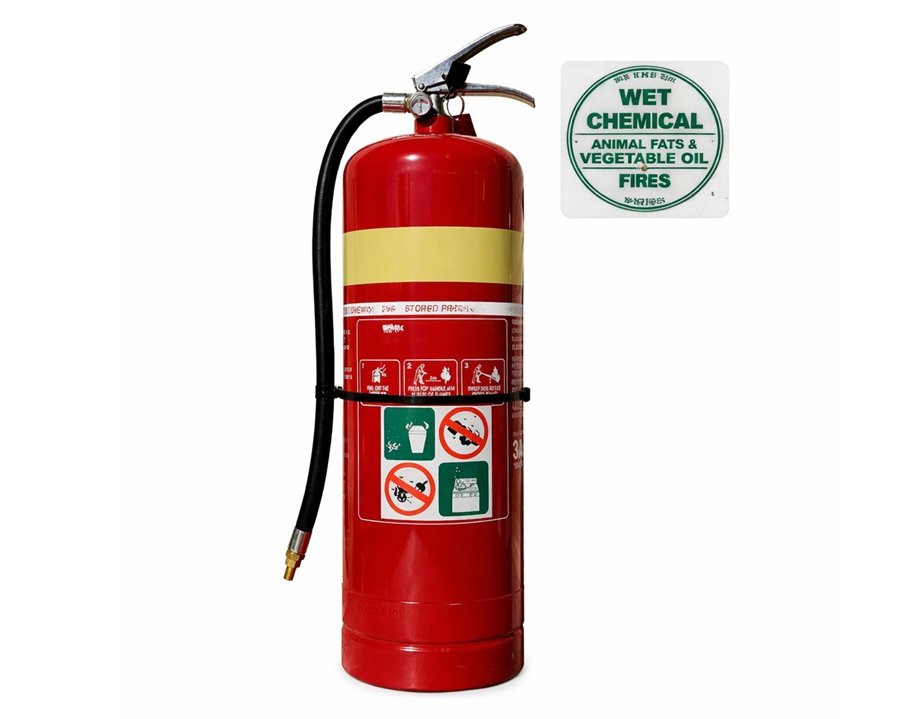
The wet chemical (AF type) extinguisher works by discharging a fine mist of potassium-based solution over the burning oil. This cools the oil rapidly and creates a soapy layer on the surface, smothering the fire and preventing re-ignition. It is rated for Class A fires (ordinary combustibles) and Class F fires (cooking oils and fats). Key applications include:
Commercial kitchens and restaurant cooking lines
Cafés and takeaway shops with deep fryers or woks
Hotel and function venue kitchens
School and aged care facility kitchens
Food manufacturing and catering operations
WHAT IS WET CHEMICAL FIRE EXTINGUISHER?
Wet chemical fire extinguishers, identified by their oatmeal (light beige) band, contain a potassium-based solution specifically designed to combat cooking oil and fat fires. Under Australian Standards and the Building Code of Australia (BCA), wet chemical extinguishers are the recommended solution for commercial cooking environments where cooking oils and fats are used.
In addition to Class F fires, they can also be used on Class A fires involving ordinary combustible materials such as paper, wood, and textiles. Cafés and restaurants where large quantities of cooking oil are used should be protected by wet chemical fire extinguishers.
These extinguishers typically come in two sizes: 2-litre and 7-litre units. Our team can help determine the most suitable size and placement for your café or restaurant to ensure compliance and maximum safety.
Do Commercial Kitchens Need a Wet Chemical Extinguisher in NSW?
Yes. Under AS 2444 and the NSW fire safety framework, commercial cooking environments with oil or fat fire risks are required to have a Class F-rated extinguisher – which means a wet chemical type. A general-purpose ABE dry powder extinguisher does not satisfy this requirement. Failure to have the correct extinguisher type in a commercial kitchen can result in insurance implications, compliance notices, and significant fire risk to staff and property.
Wet Chemical vs Dry Powder Extinguisher
For kitchens with cooking oil risks, wet chemical is the mandatory and correct choice. Dry powder (ABE) extinguishers are not safe for use on Class F cooking oil fires – the fine powder can cause violent flame spread when applied to a burning oil surface. Always ensure your kitchen has a correctly rated and regularly serviced wet chemical extinguisher in addition to any general-purpose ABE units in adjacent areas.
Supply, Install & Service in Sydney & NSW
SPS supplies and installs wet chemical fire extinguishers for commercial kitchens and hospitality venues across Sydney and NSW. We assess your cooking equipment layout, determine the correct extinguisher size and placement, and provide full certification documentation to support your fire safety compliance obligations. Contact us for a commercial kitchen fire safety equipment quote in Sydney or NSW.
F CLASS APPLICABLE
Class F
COOKING OILS & FATS
— Vegetable & animal oils
— Commercial fryers
— Woks & deep fat fryers
— Overheated cooking oil
NEVER USE WATER OR CO2 ON COOKING OIL FIRES
Applying water to a burning oil fire causes an explosive steam reaction, dramatically escalating the fire. Only a wet chemical extinguisher should be used on Class F fires. This is a critical safety requirement in all commercial kitchen environments.
Our Process
How It Works
When discharged, the wet chemical agent reacts with the hot oil in a process known as saponification. This creates a soapy foam layer that:
Forms a seal over the surface of the oil
Cools the burning fuel
Prevents oxygen from feeding the fire
Minimises the risk of re-ignition
This controlled smothering and cooling effect makes it highly effective for deep fryer and cooking oil fires.
NCC / BCA Requirements
Under the NCC, buildings that contain commercial cooking equipment involving deep frying or heating of oils must be provided with appropriate protection against Class F fire risks. This includes:
Installation of suitable portable extinguishers
Correct sizing and rating
Appropriate placement within required travel distances
Protection aligned with the specific kitchen hazard level
Failure to provide suitable Class F protection can result in non-compliance and significant fire risk.
Typical Applications
Restaurants
Cafes
Commercial kitchens
Food courts
Catering facilities
Industrial food processing areas
Wet chemical extinguishers are considered the most effective portable solution for heated cooking oil fires and are essential wherever deep frying operations are present.